


How banks and wallets moved stablecoins from crypto use case to financial infrastructure
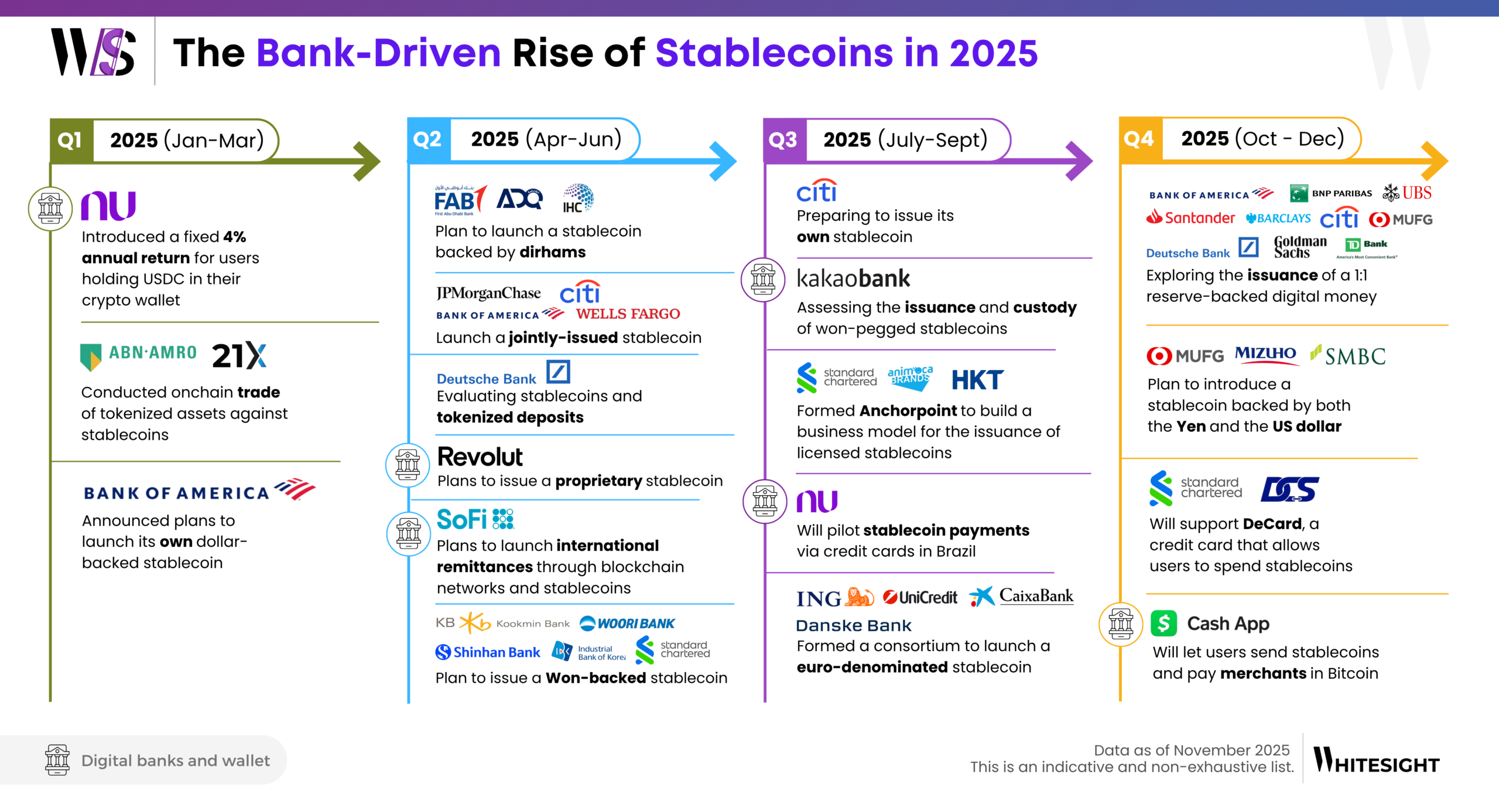
Stablecoins became a major bank-led theme in 2025, with activity moving steadily from isolated experiments to coordinated issuance, custody, payments and remittance plans. Across the year, banks and digital finance players moved beyond simply exploring stablecoins and began positioning them as tools for deposits, cross-border money movement, tokenized asset settlement and everyday spending.
- Stablecoins moved from crypto-native products into mainstream banking roadmaps:
Early activity from Nubank, ABN AMRO, 21X and Bank of America showed stablecoins being used for wallet yield, tokenized asset settlement and dollar-backed issuance plans. By Q2 and Q3, the activity became more institutional, with Citi, JPMorgan Chase, Wells Fargo, Deutsche Bank, KakaoBank and Revolut exploring proprietary, jointly issued or locally pegged stablecoins. - Regional currency strategies became more visible:
The stablecoin opportunity in 2025 was not limited to U.S. dollar-backed digital money. Korean banks planned won-backed stablecoins, Japanese banks explored yen and U.S. dollar-backed models, and European banks formed a consortium for a euro-denominated stablecoin. This points to a broader shift where stablecoins are being shaped around domestic payment needs, regulatory expectations and currency-specific use cases. - The use cases expanded from issuance to real transaction flows:
By the second half of the year, the focus widened into remittances, credit card payments, merchant payments and stablecoin spending. SoFi’s international remittance plans, Nubank’s credit card stablecoin payment pilot in Brazil, Standard Chartered and DCS’s DeCard support, and Cash App’s stablecoin and merchant payment plans show stablecoins moving closer to practical consumer and business use.
The 2025 timeline shows stablecoins becoming a serious infrastructure priority for banks and fintechs. What started with yield, tokenized settlement and issuance plans expanded into multi-bank consortia, local-currency stablecoins, remittances and payment products. The strongest signal is that stablecoins are no longer being treated only as a crypto market instrument; they are increasingly being built into the future operating model for banking, payments and cross-border finance.
Fintech's future on your radar
Actionable insights on fintech, delivered regularly. Join Radar for exclusive fintech content and member benefits.
Be the First to Know About the Next Big Fintech Strategies!
Don’t miss out on the next big fintech wave! Follow us on LinkedIn and subscribe to our Future of Fintech Newsletter to be the first to know about the Next Big Fintech Strategies.
Don’t miss out on the next big fintech wave! Follow us on LinkedIn for daily updates and in-depth analysis. Subscribe to our weekly newsletter for curated insights delivered straight to your inbox. Unlock exclusive access to our membership plans for deeper dives into market trends, competitor analysis, and investment opportunities.