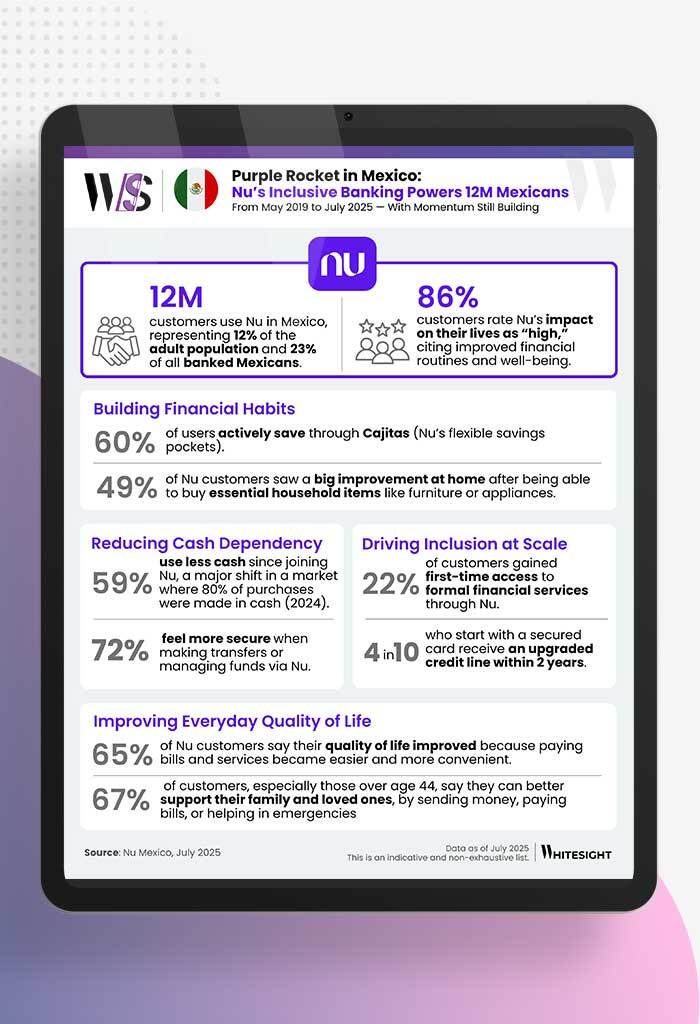
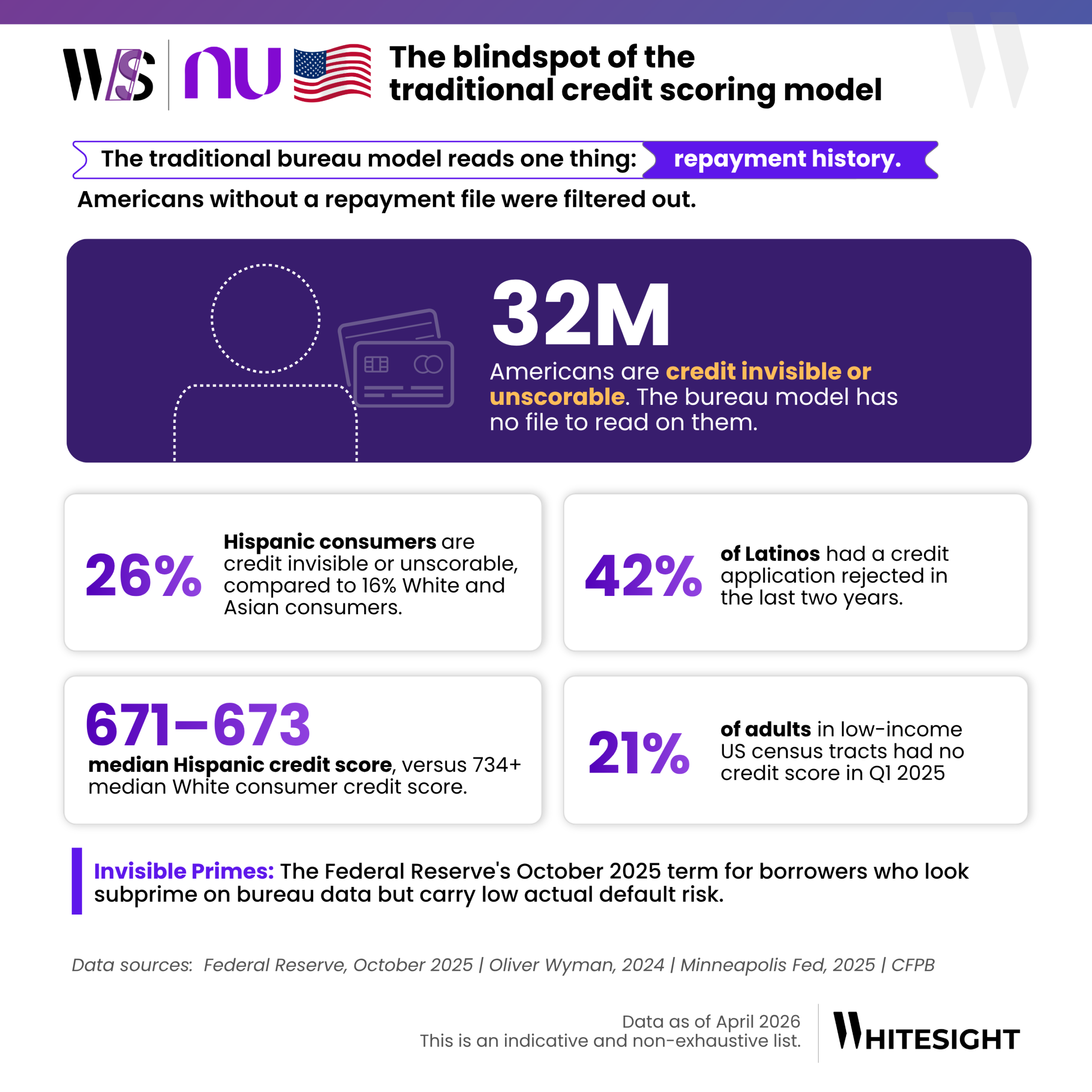
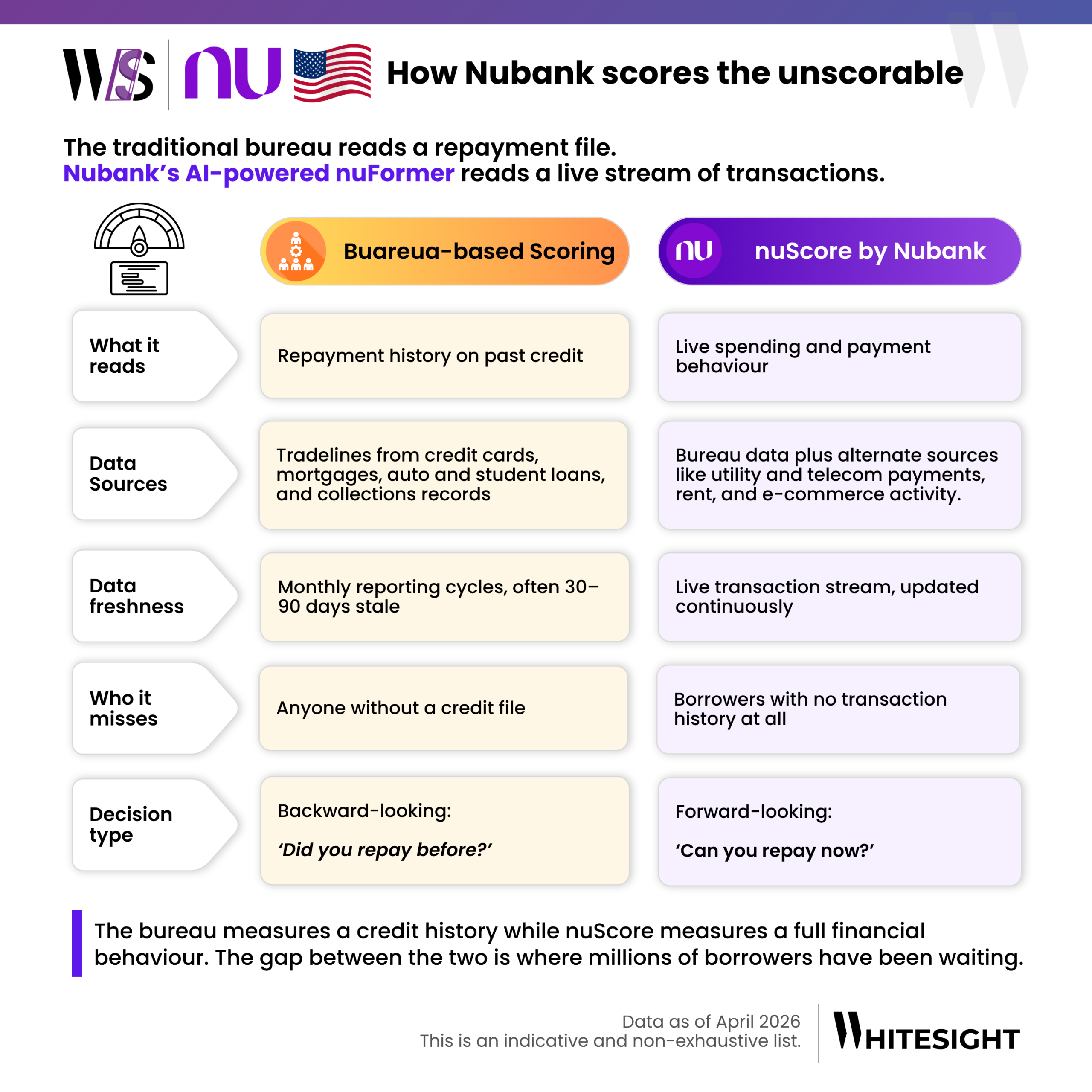
For decades, the US credit system asked one question: Have you borrowed money before, and did you pay it back?It was a reasonable question in 1956, when modern credit scoring was invented. It is still the question most US banks rely on today.For 32 million Americans, it is the wrong one.When the absence of a credit history became evidence of risk Traditional credit scoring models had no mechanism to evaluate borrowers outside that frame. Repayment history was the only signal the architecture was designed to read. For anyone who had never needed to borrow, that question had no answer. And a model with no answer defaulted to the same conclusion every time: denial.The consequences are precise. 26% of Hispanic consumers in the US are credit invisible or unscorable, compared to 16% of White and Asian consumers. The median Hispanic credit score is 671–673, compared with 734+ for White consumers. 42% of Latinos report having a credit application rejected in the last two years.In October 2025, the Federal Reserve gave this underserved consumer group a name: ‘invisible primes’ – borrowers who appear subprime on bureau data but carry a low propensity to default. A Harvard study found that a fintech using […]