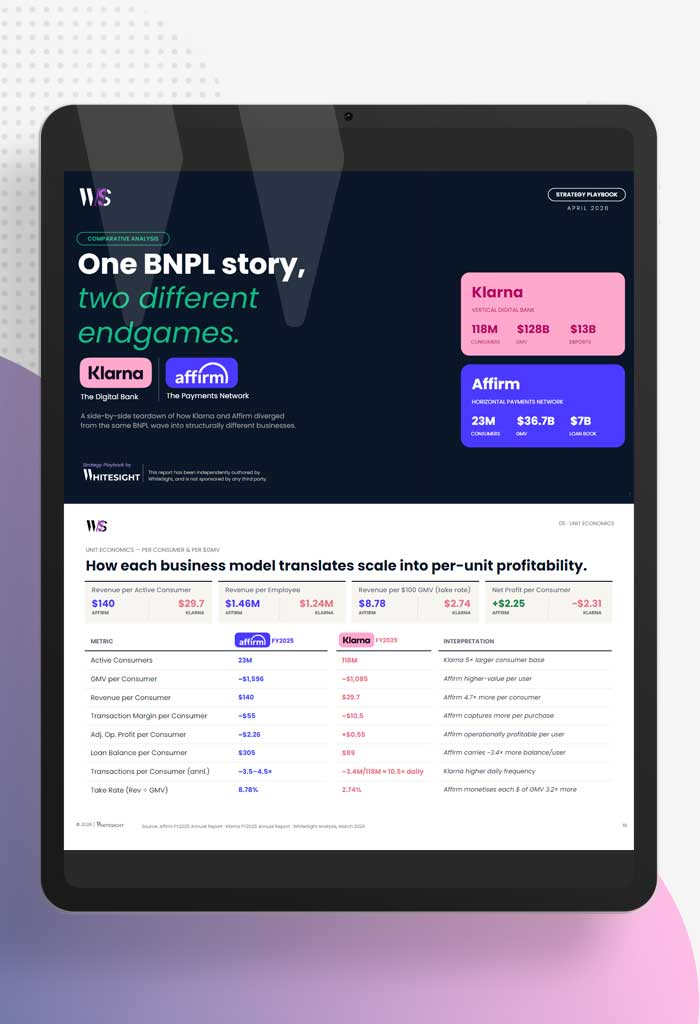
Adyen has become the powerful financial infrastructure beneath some of the world’s largest platforms such as Uber, Etsy, eBay, Toast, Oracle, SAP. This report maps the full strategic playbook: from how Adyen evolved from a payments processor to a full-stack embedded finance enabler. By partnering with enterprise software platforms and SMB marketplaces, Adyen created an indirect distribution network that reaches enterprises, small businesses, and individuals at scale — at a fraction of what it costs traditional financial services players to acquire and serve those same segments.
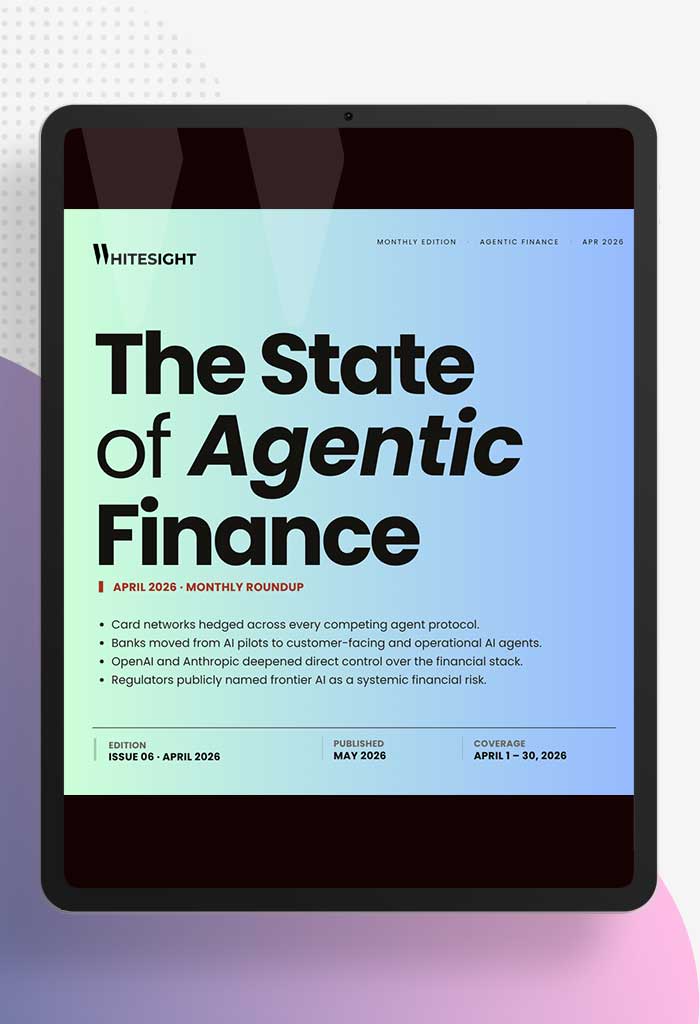
Across 2025 and Q1 2026, Visa and Mastercard strengthened their roles as the integration layer for stablecoin payments. Visa expanded stablecoin settlement, card issuance, wallet integrations, and cross-border payments across public blockchains, reaching $3.5B in annualized settlement volume, supporting 130+ card programs across 40+ countries. Meanwhile, Mastercard advanced its MTN network for tokenized asset transfers, acquired BVNK for $1.8B, and expanded MTN into EEMEA with participants including JPMorgan, Standard Chartered, and SoFi.
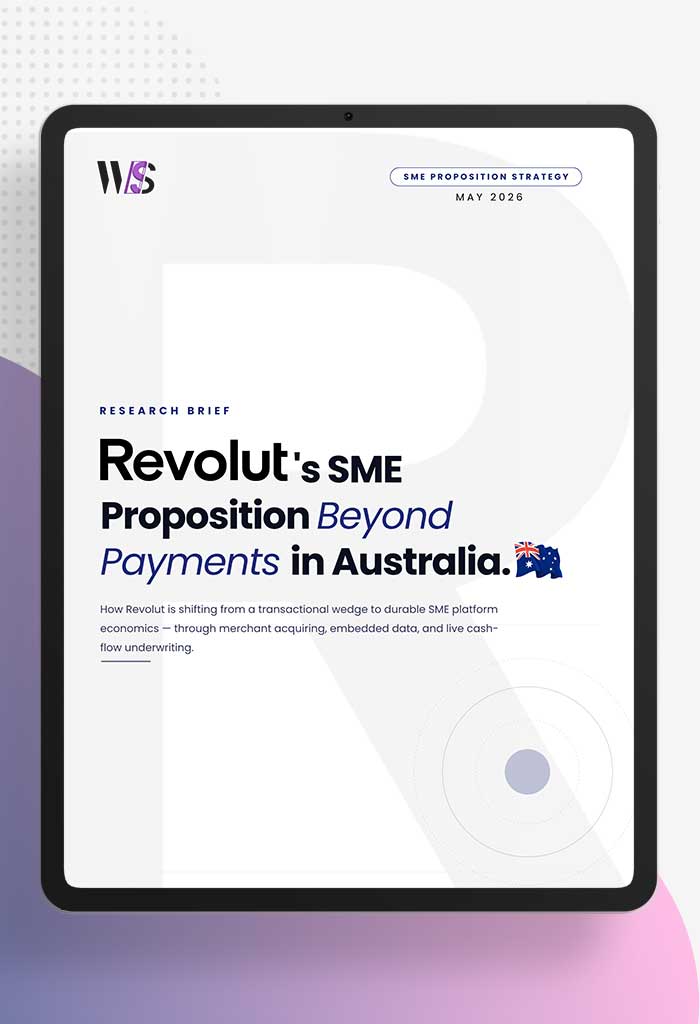
Australia is one of those markets that looks attractive from the outside and unforgiving in practice. Xinja folded. Volt shut down. 86 400 was absorbed. Yet Revolut, a UK challenger with no banking licence, crossed 1 million customers and turned profitable.
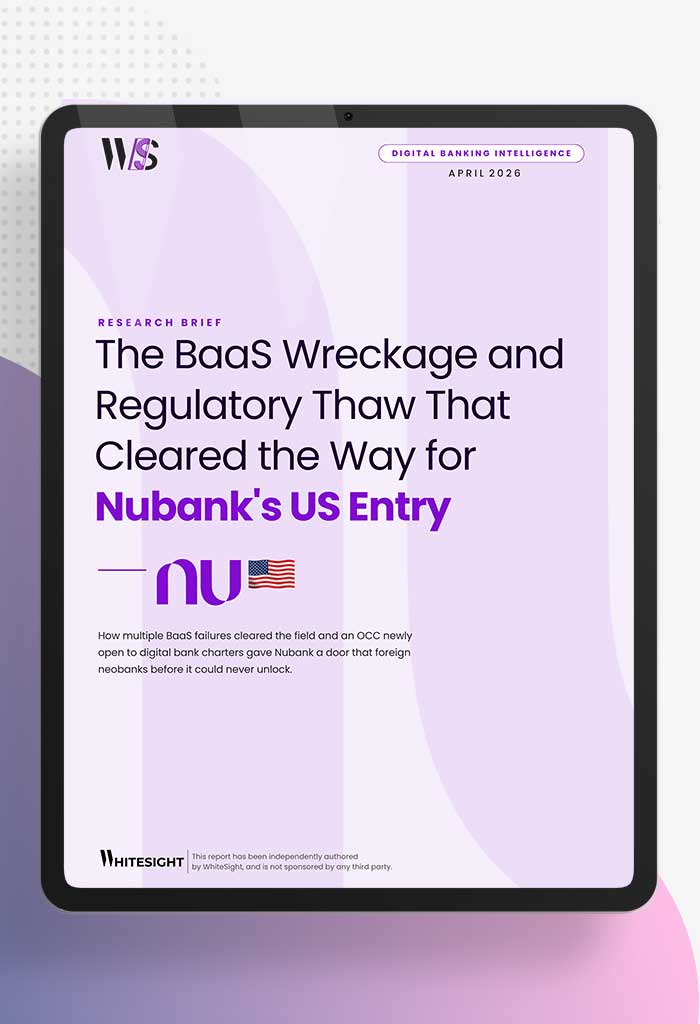
Most foreign digital banks that entered the US burned cash, hit the regulatory wall, and retreated. Nubank entered with a conditional OCC charter, $2.9B in net profit, and 4–5 million customers already active in the US. With 131 million customers across Latin America, the question is whether it has found the model that finally makes a foreign digital bank work at scale in America.
Most SME neobanks can win attention. Far fewer can attract deposits, build a meaningful loan book, and reach profitability. Allica has done all three. Now, with a fresh $155 million Series D and ambitions beyond the UK, the bigger question is whether it has found one of the few scalable models in SME banking.
Adyen was built to replace fragmented payment stacks with a single platform that handles payments end to end. That foundation has scaled to €1.4T in processed volume in 2025, with net revenue nearing €2.4B. By bringing online, in-store, and in-app payments into one platform, Adyen turns transactions into shared data that strengthens reporting and optimization across channels.At WhiteSight, we’ve unpacked Adyen’s growth strategy, highlighting the product and market moves driving this expansion.
Monzo went from challenger bank to a £1.2B-revenue machine, without losing its inimitable Hot Coral halo. What actually powered the step-up: Flex’s shift from BNPL to full-stack credit, paid plans with real stickiness, and SME monetisation at scale. Grab the deep dive for hard numbers, product moves, and the playbook behind 12.2M customers and counting.
From disrupting cross-border money movement to building a 60M+ customer base across 48 countries, Revolut has consistently stretched the boundaries of what a digital bank can be. Now, CEO Nik Storonsky has set a new ambition: to make Revolut the first truly global bank – serving 100M customers, in 100 countries, and generating $100B in revenues. With investors projecting a $242B valuation by 2030, Revolut’s journey is now about becoming An Everything Bank for Everyone.
At WhiteSight, we’ve unpacked the strategy behind this vision, uncovering how Revolut is shaping its model, products, and market moves to turn ambitious goals into a global reality.