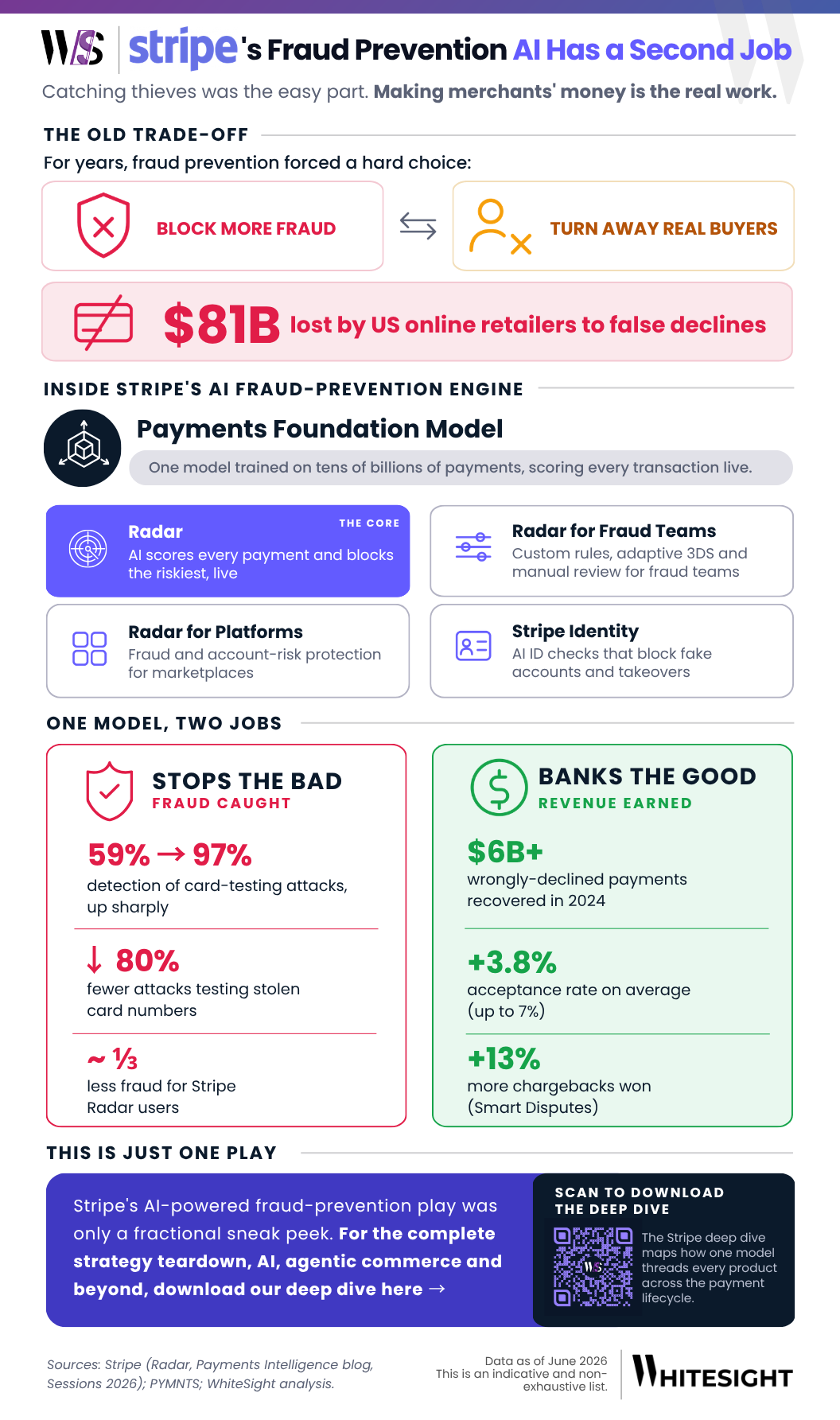



You buy something online, tap pay, and the payment is declined. The money is there, the card is yours, nothing is wrong. A fraud filter decided you looked risky and said no in half a second, so you gave up and bought elsewhere. The merchant never knew you were there. It only knows it lost a sale.That mistake is a false decline, and it scales. False declines cost US online retailers an estimated $81 billion a year, more than the fraud that slips through. The thieves a system catches are visible and countable; the honest customers it wrongly turns away are invisible, and they cost more.For as long as the internet has sold things, businesses fought fraud on one instinct: build a higher wall. Block more, lose less. But a wall cannot tell a thief from a customer in a hurry, so every notch tighter costs more legitimate revenue than it saves. That trade-off, safety against sales, became the accepted price of selling online. Stripe Has Already Seen That Card Stripe questioned it. The company processes online payments for millions of businesses and handles more than $1.9 trillion a year. Its question was a different one: how to approve more […]